Hermony: Empowering Women with PCOS
Overview
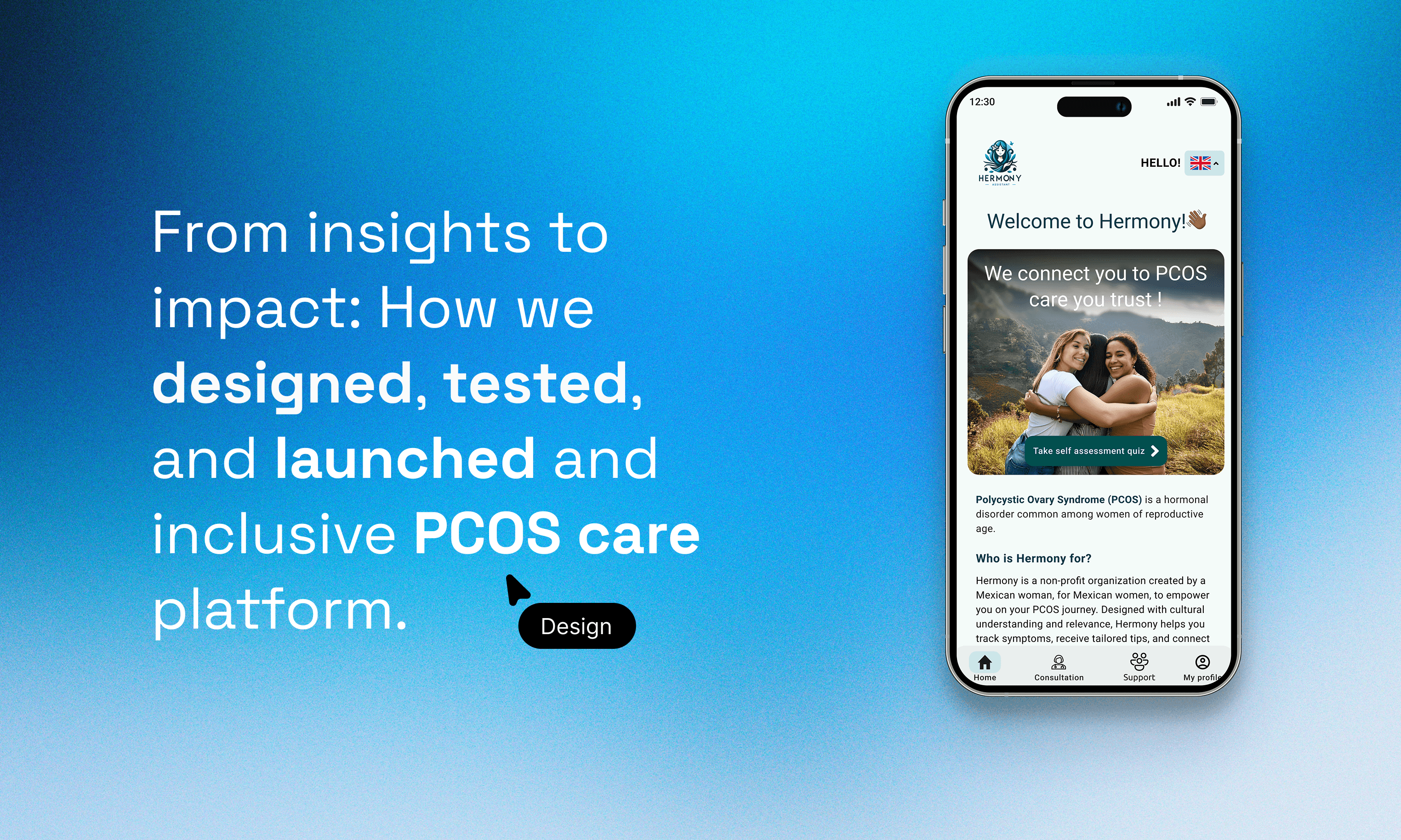
Millions of women suffer from Polycystic Ovary Syndrome (PCOS), yet they face limited healthcare access, misinformation, and a lack of support. Hermony is a culturally adapted, bilingual digital platform that empowers women with personalized symptom tracking, telehealth access, and a supportive community.
My Role
Product Designer- (UX Research, VisualDesign, Prototyping)
Team
5 members (3 Product Designers, 2 Business Developers)
Timeline
4 months - Aug 2024 to Dec 2024
Designing Scalable & User-Friendly Health Support for Women with PCOS
CONTEXT
Understanding PCOS & The Need for Hermony
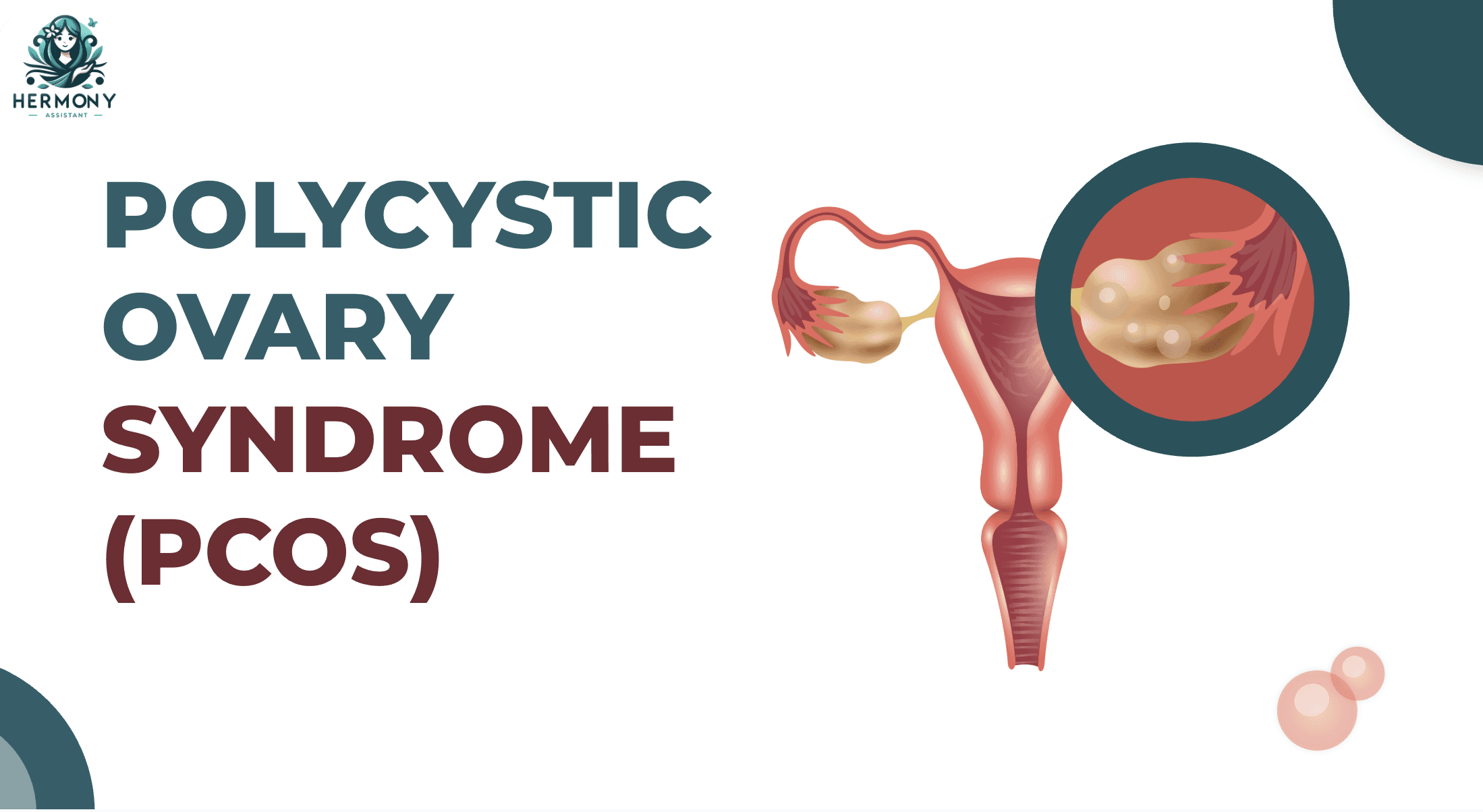
PCOS is a common hormonal disorder affecting 6-12% of women globally, but in Mexico, the numbers are even higher—20-22% of women of reproductive age are affected, yet awareness remains critically low.Without proper management, PCOS can lead to infertility, diabetes, heart disease, and mental health struggles. Despite its serious health risks, women often face barriers in diagnosis, treatment, and emotional support.
PROBLEM STATEMENT
Understanding the Gaps in PCOS Management

Misinformation and unverified sources lead to delayed diagnosis and confusion in PCOS management.
Financial, cultural, and systemic barriers prevent women from receiving proper PCOS care.
Lack of awareness and stigma leave women without the support they need to manage PCOS effectively.
Existing tools focus on fragmented solutions, leaving women without a holistic approach to PCOS care.
GOALS

Empowers women to track, manage, and understand PCOS through reliable, medically-backed insights.
Bridges healthcare gaps by connecting users to trusted specialists through telehealth.
Creates a supportive ecosystem for PCOS education and community engagement.
RESEARCH
Diving into user stories
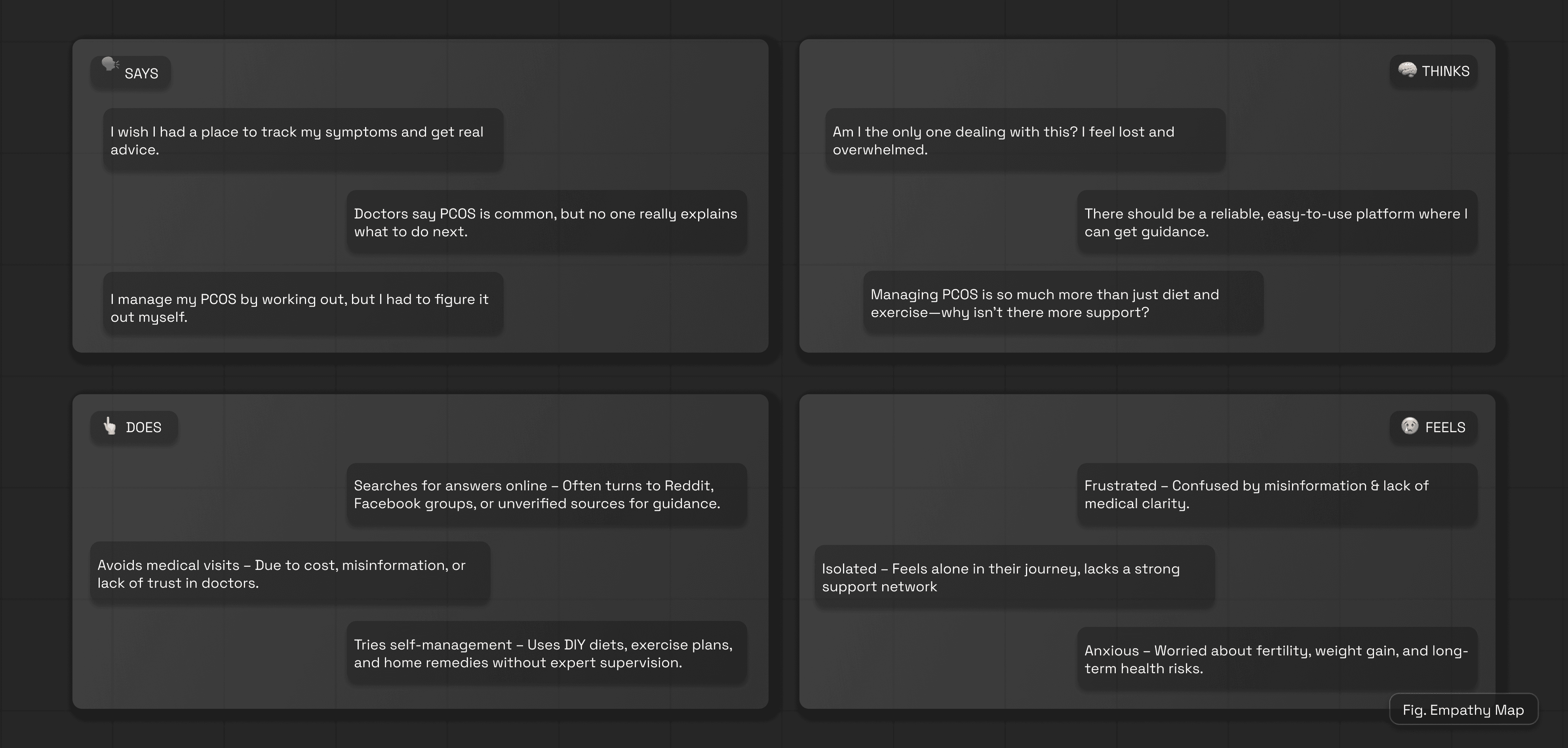
To build a solution that truly meets users' needs, we conducted 35+ interviews with Women with PCOS (Diagnosed & Undiagnosed), Healthcare Providers (Gynecologists & Endocrinologists), and male allies(family members). Through these interviews, we gained insights into how they track PCOS and what improvements are needed.
Key research insights
To truly understand the impact of PCOS on women in Mexico, we immersed ourselves in real user experiences, stories, and struggles. Our research wasn’t just about gathering numbers—it was about listening, learning, and feeling the weight of the challenges women face every day.
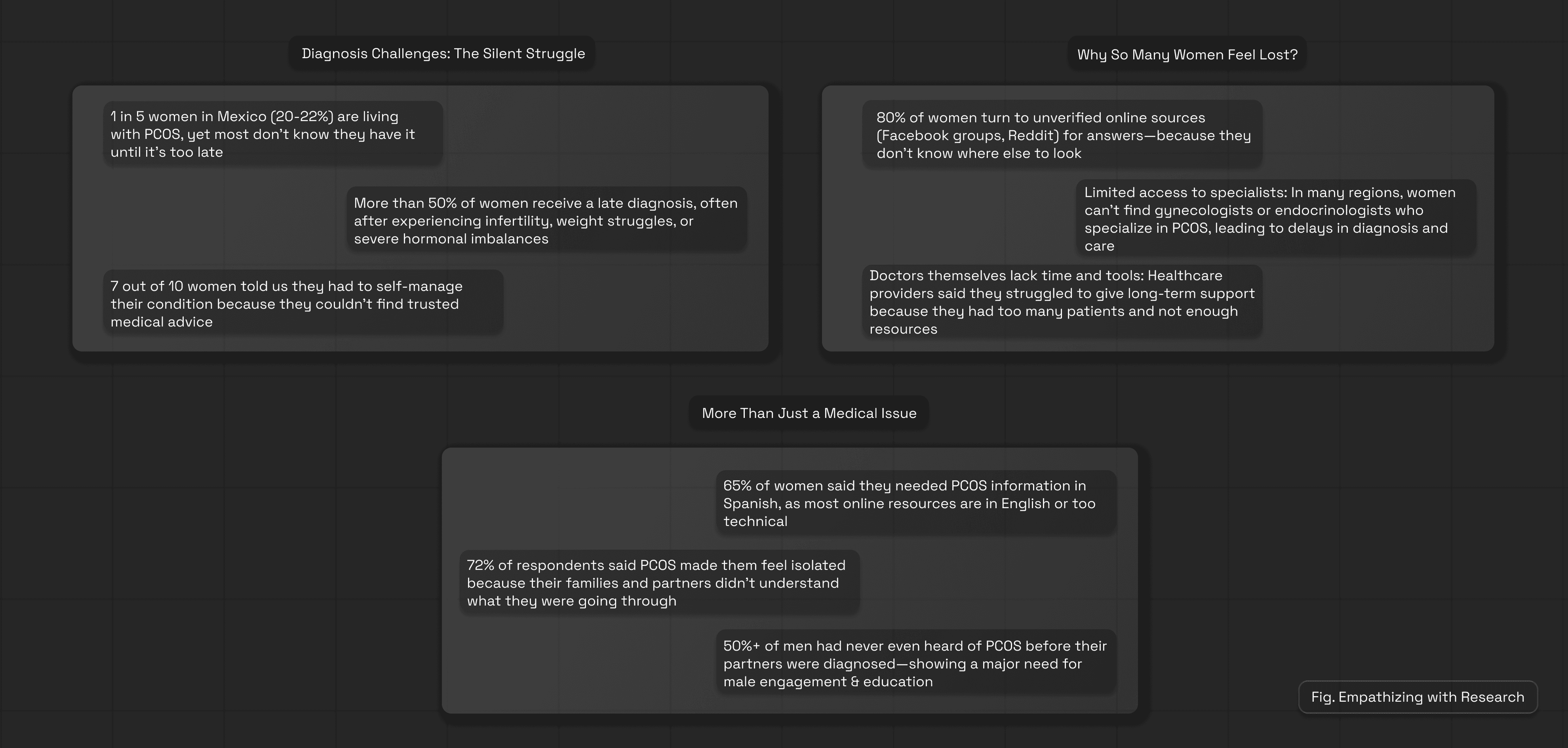
Competitive Analysis
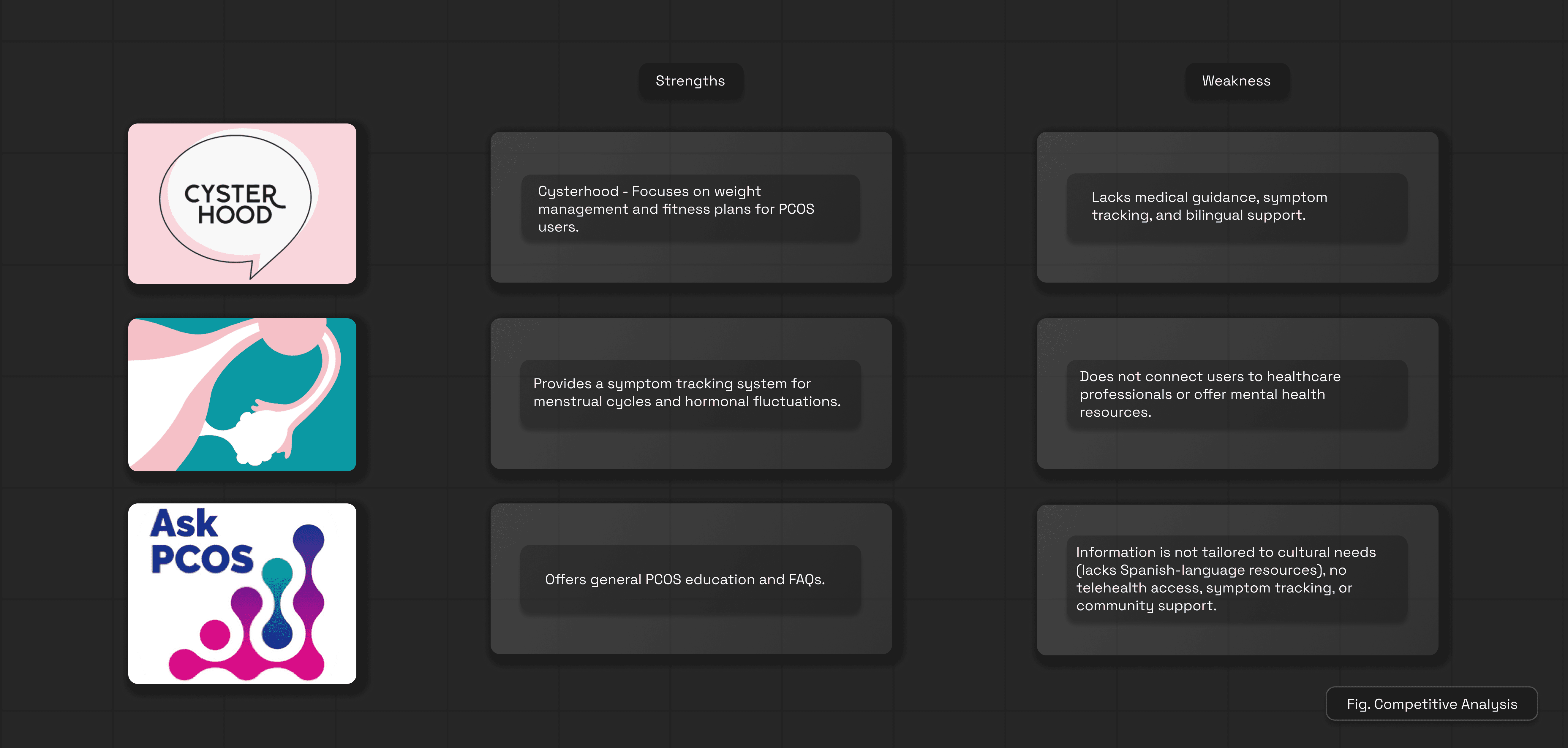
After identifying user pain points, we analyzed existing solutions to see where Hermony could stand out.
By looking at Cysterhood, PCOS Tracker, and learning more about PCOS, they all have some features like PCOS tracking, bilingual support, and resources, but each is missing something. From this, we got a clear idea—why not put everything in one place? This helped us shape Hermony into a user-centric, easy-to-use platform that actually works for Mexican women, making it more complete and accessible than the rest.
IDEATION
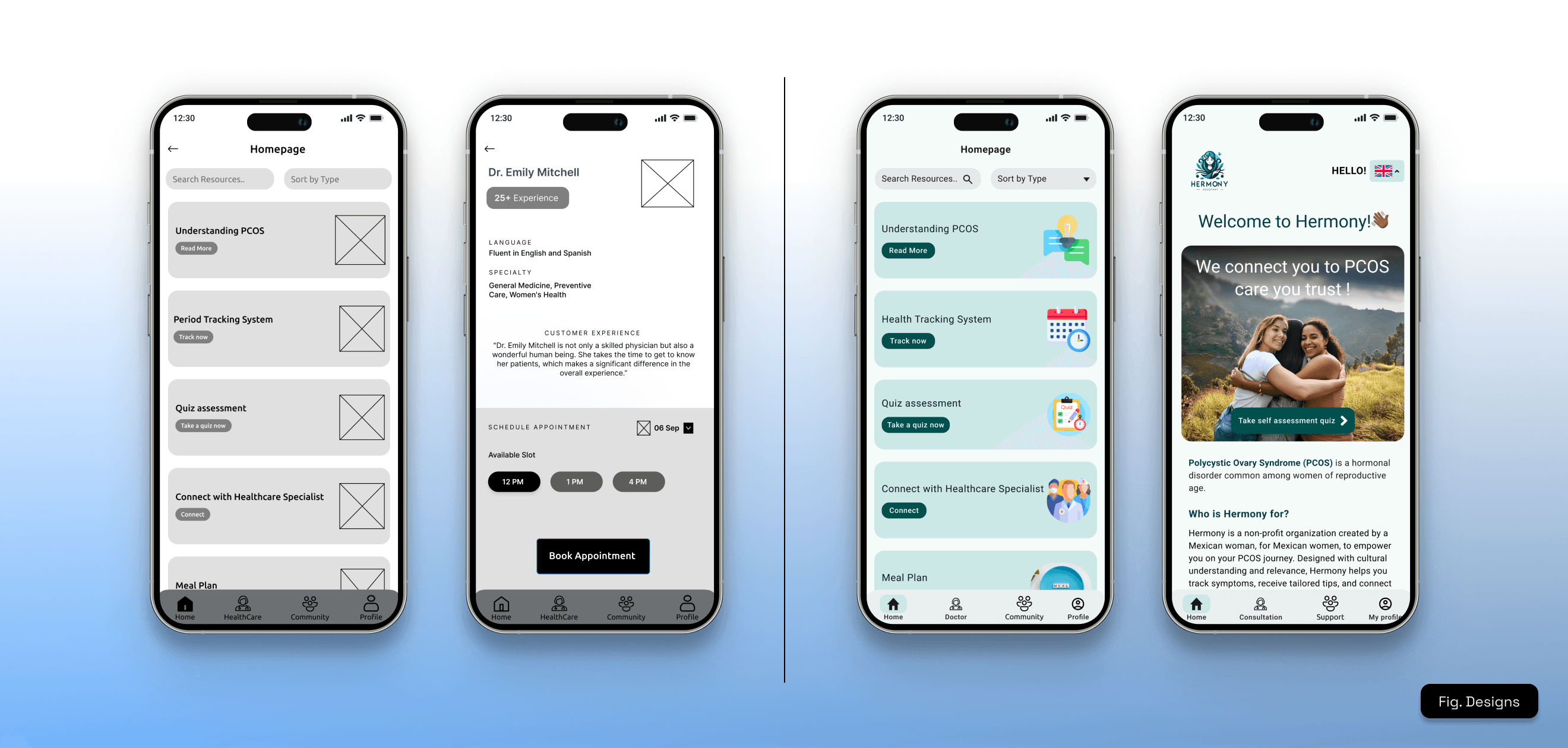
During the early ideation phase, we started with low-fidelity wireframes to establish core functionalities and workflows. This included designing the homepage and doctor consultation flow, ensuring they aligned with user needs.
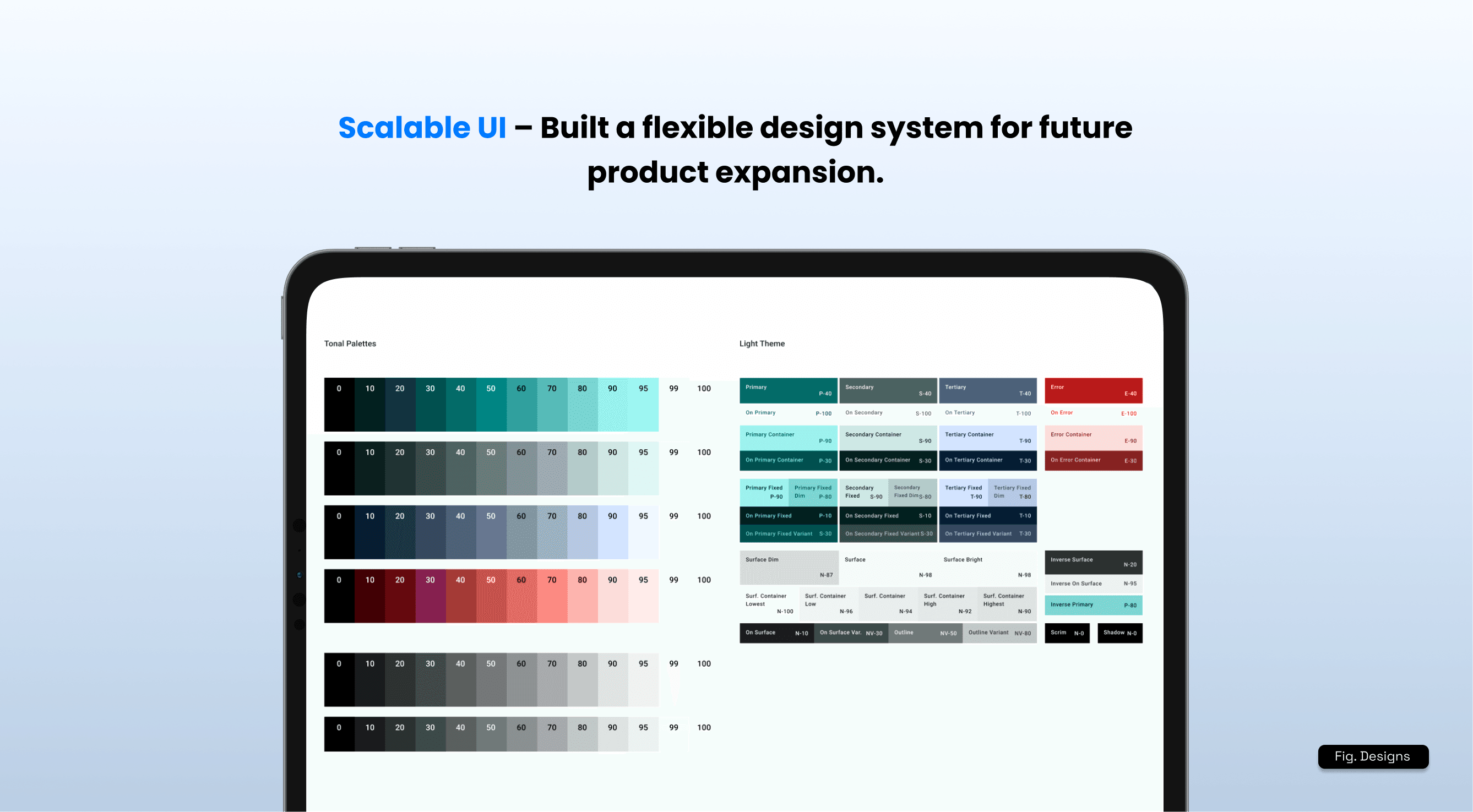
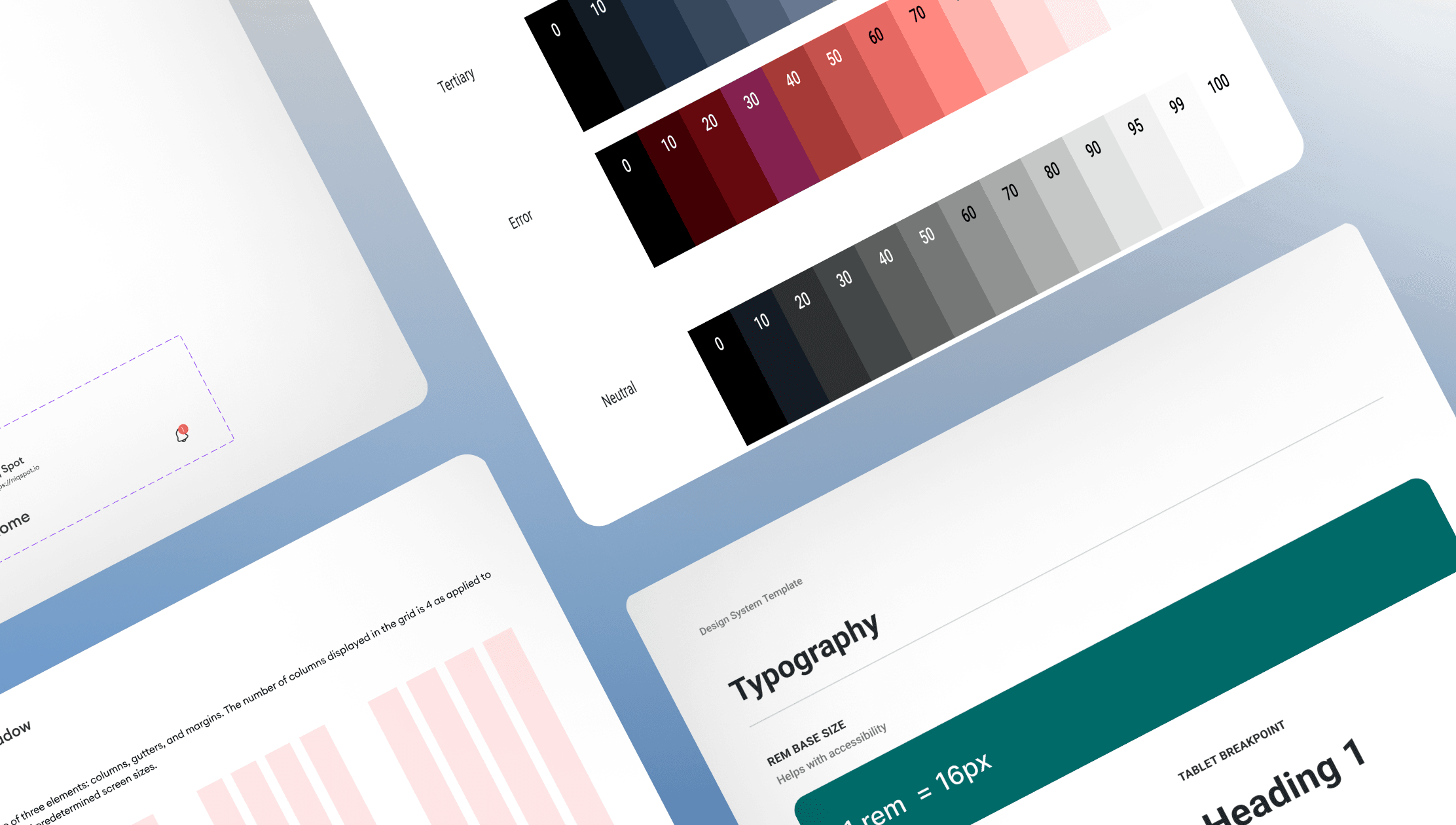
To maintain consistency and accessibility, we then developed a visual design system—defining typography, colors, and UI components to create a seamless and intuitive experience.
Validating & Iterating through real feedback
We conducted eight rounds of A/B testing with the client and women with PCOS to improve usability, engagement, and trust. Iterative feedback helped us continuously optimize the platform for a seamless, user-centric experience.
Iteration 1
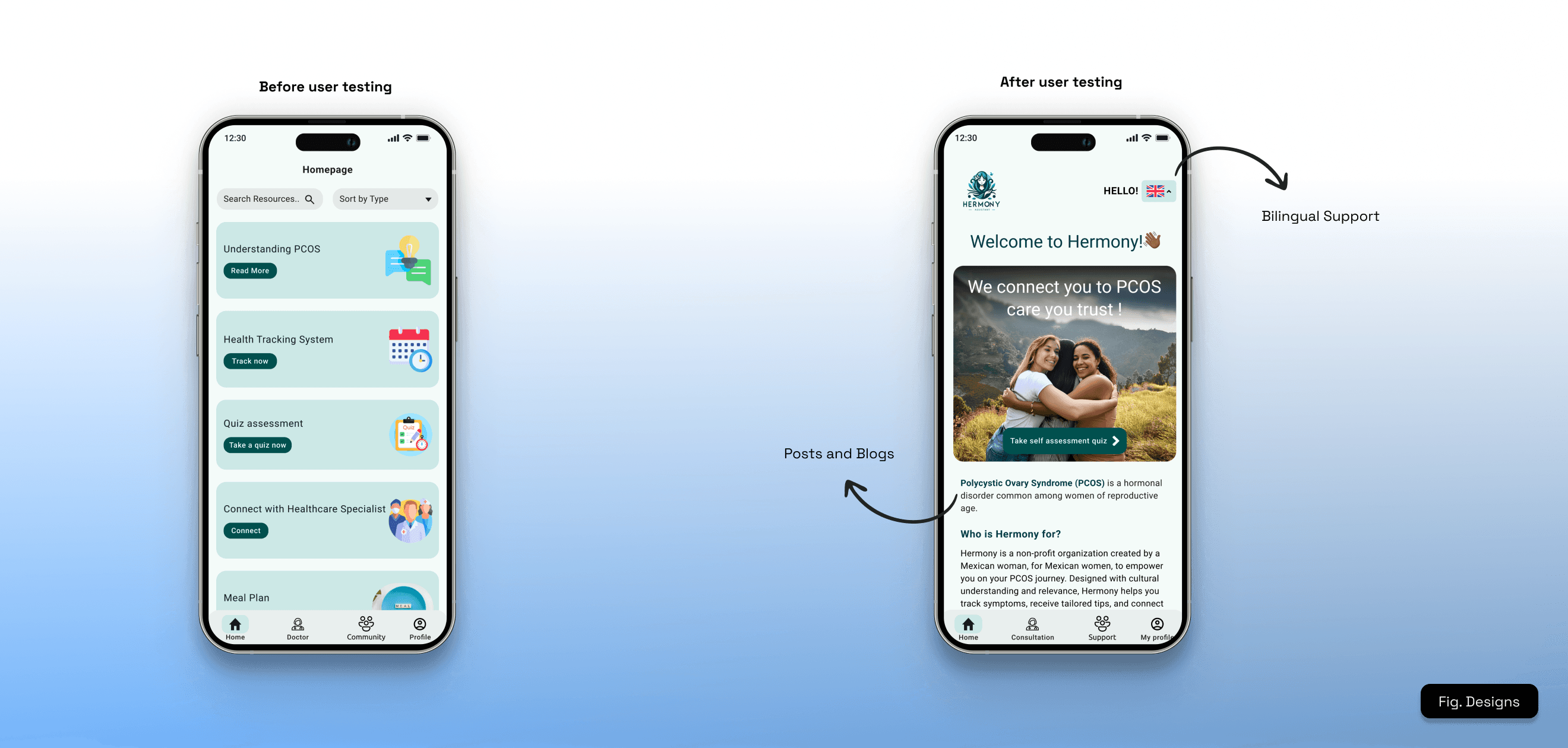
Bilingual Support & Content Strategy
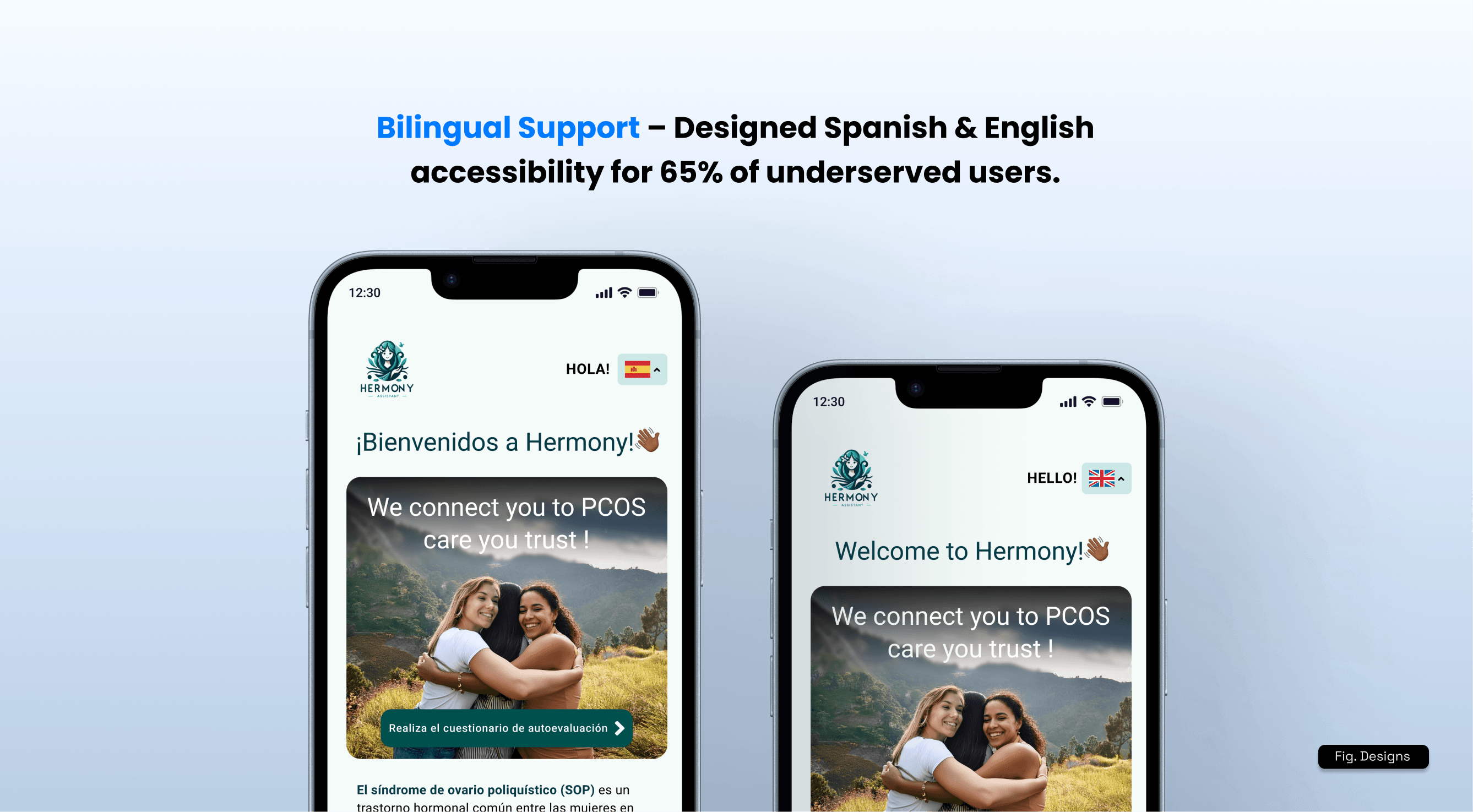
Initially, bilingual support was limited to blog posts, but user testing revealed that Spanish-speaking users struggled to navigate the platform. We expanded language support to key sections and introduced engaging content, which significantly improved accessibility, interaction, and retention—receiving highly positive feedback.
Iteration 2
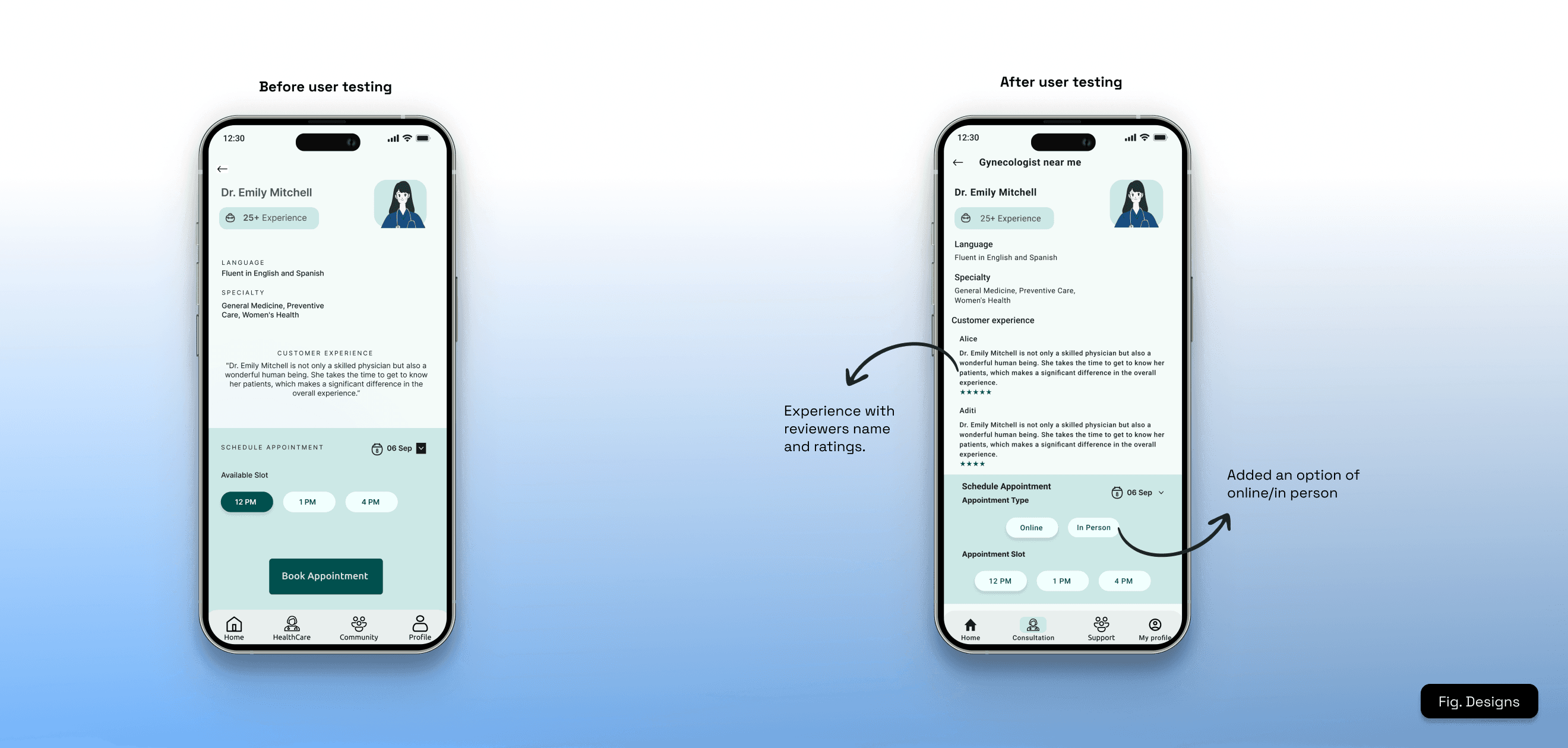
Enhancing Doctor Consultations for Accessibility & Trust
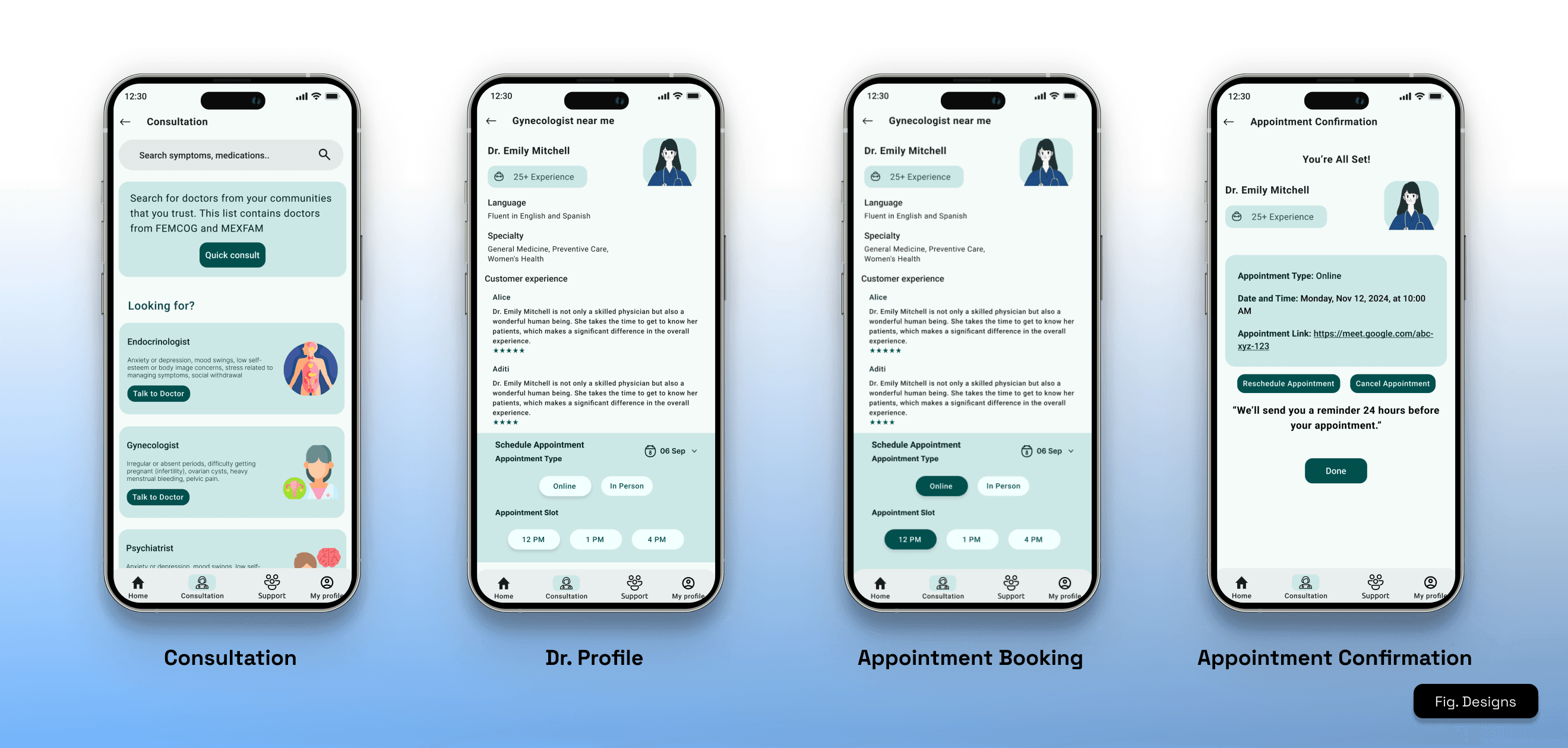
To improve accessibility, we added in-person and online appointment booking, making telehealth easier for remote users. We also introduced a review system with user names to build trust and allow patients to connect with others for shared healthcare experiences.
FINAL DESIGNS
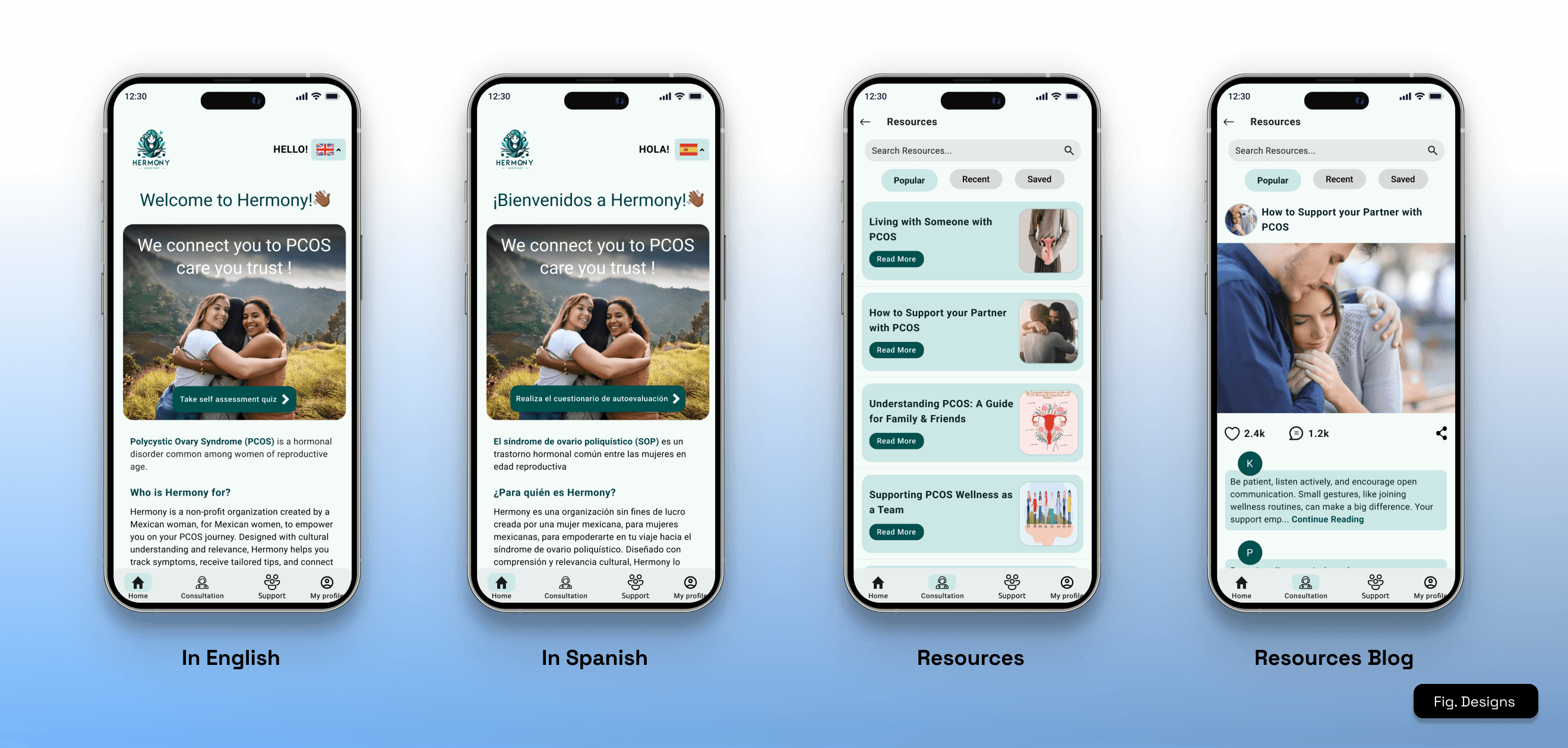
Empowering Women’s Health: PCOS Care, Simplified.
Hermony offers bilingual resources in English and Spanish, allowing users to access trusted content in their preferred language. This improved accessibility, engagement, and made the platform more inclusive for Spanish-speaking users.
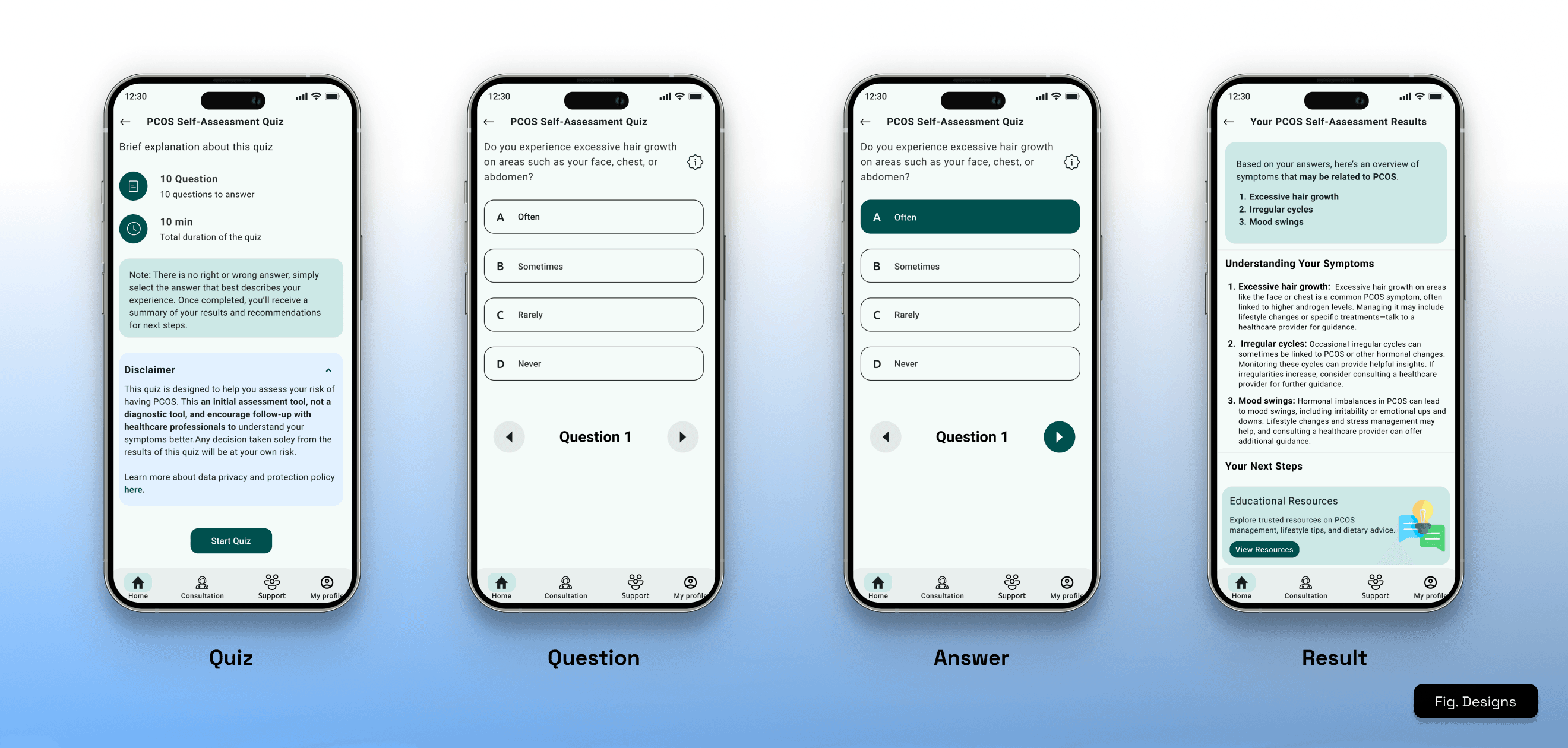
Quiz Assessment: Personalized PCOS Insights
The quiz-based assessment helps users identify potential PCOS symptoms through guided questions and offers personalized recommendations. Designed with healthcare professionals, it supports early detection and encourages timely medical action.
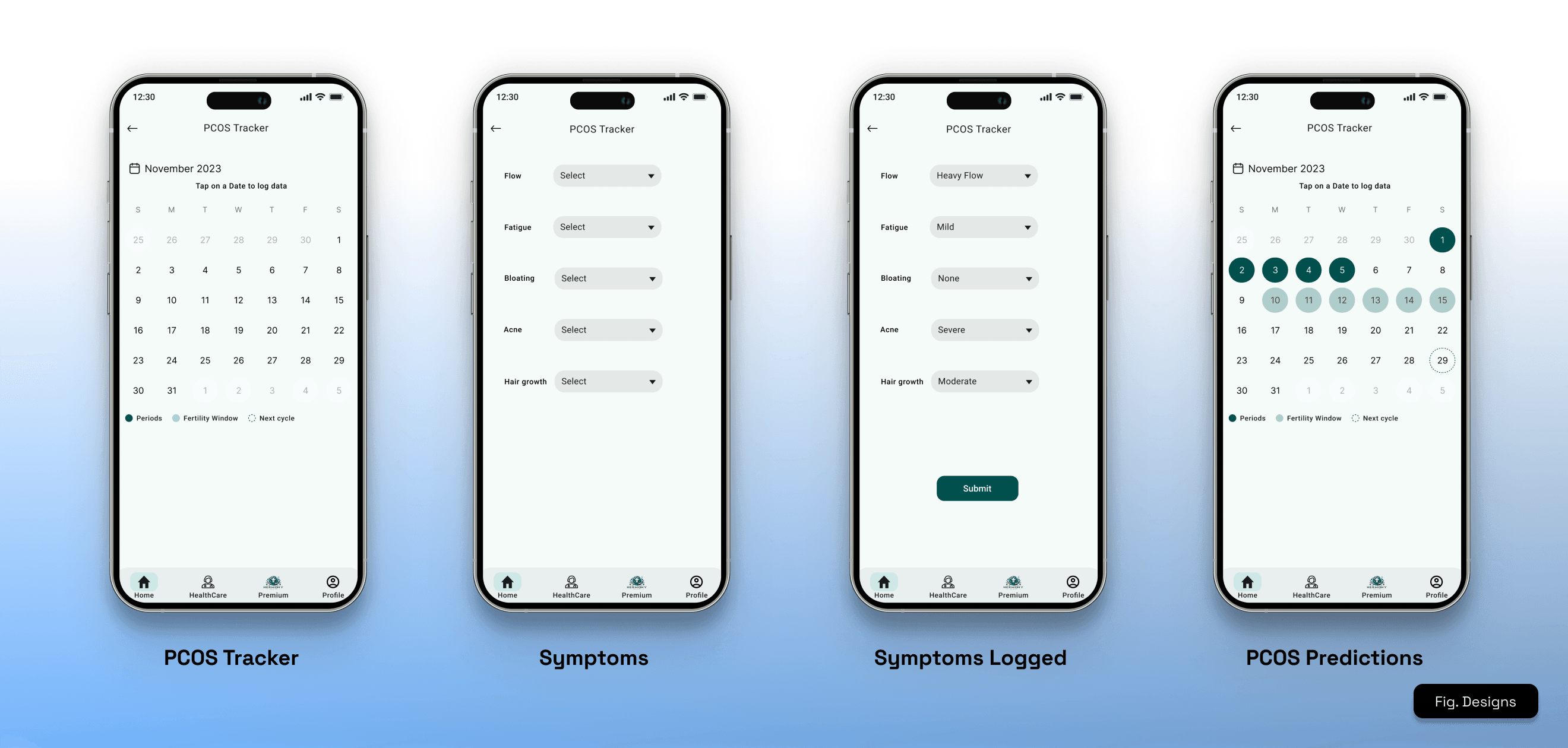
PCOS Tracker: Simplifying Symptom Management
The PCOS Tracker lets users log symptoms, track cycles, and monitor lifestyle changes, offering doctor-verified insights and patterns. It empowers proactive health management and supports better diagnosis through structured data.
Consultation: Connecting with Professionals
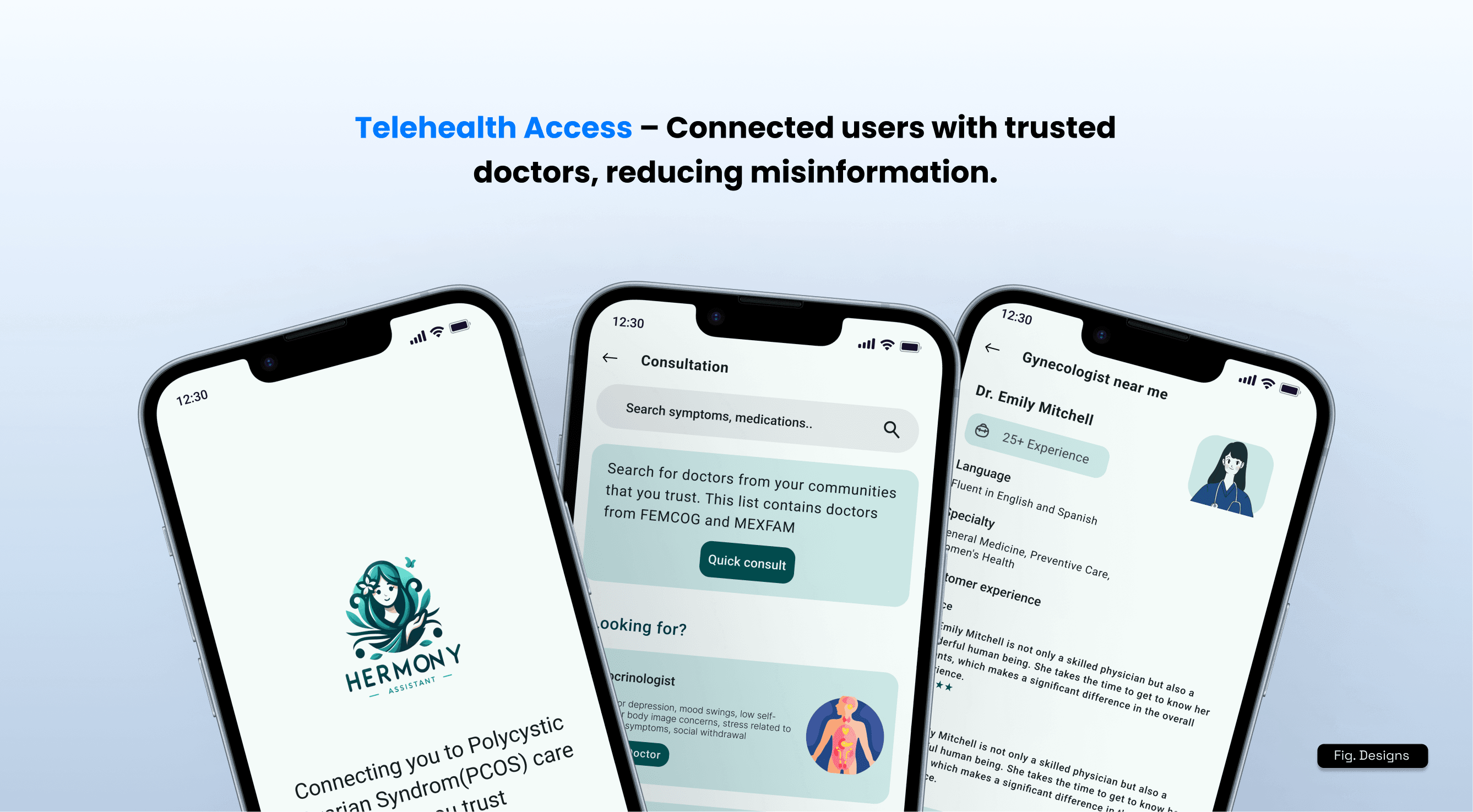
Hermony’s consultation feature allows users to book appointments with trusted gynecologists and endocrinologists—either in-person or online. With verified doctor profiles, reviews, and ratings, users can make informed choices and access personalized care, no matter where they are.
BUSINESS MODEL

Freemium Model
Free symptom tracking & basic education, premium for personalized health plans.

BODO (Buy One, Donate One)
Every premium subscription donates one to low-income women

Affiliate Partnerships
Partnered with health brands to provide discounted wellness products.
KEY LEARNINGS

Cultural relevance in UX is crucial
Language & accessibility impact user engagement.
Women need medical + emotional + community support.
User feedback shapes better products
Continuous iteration based on real pain points.