iSTART-Early
Overview
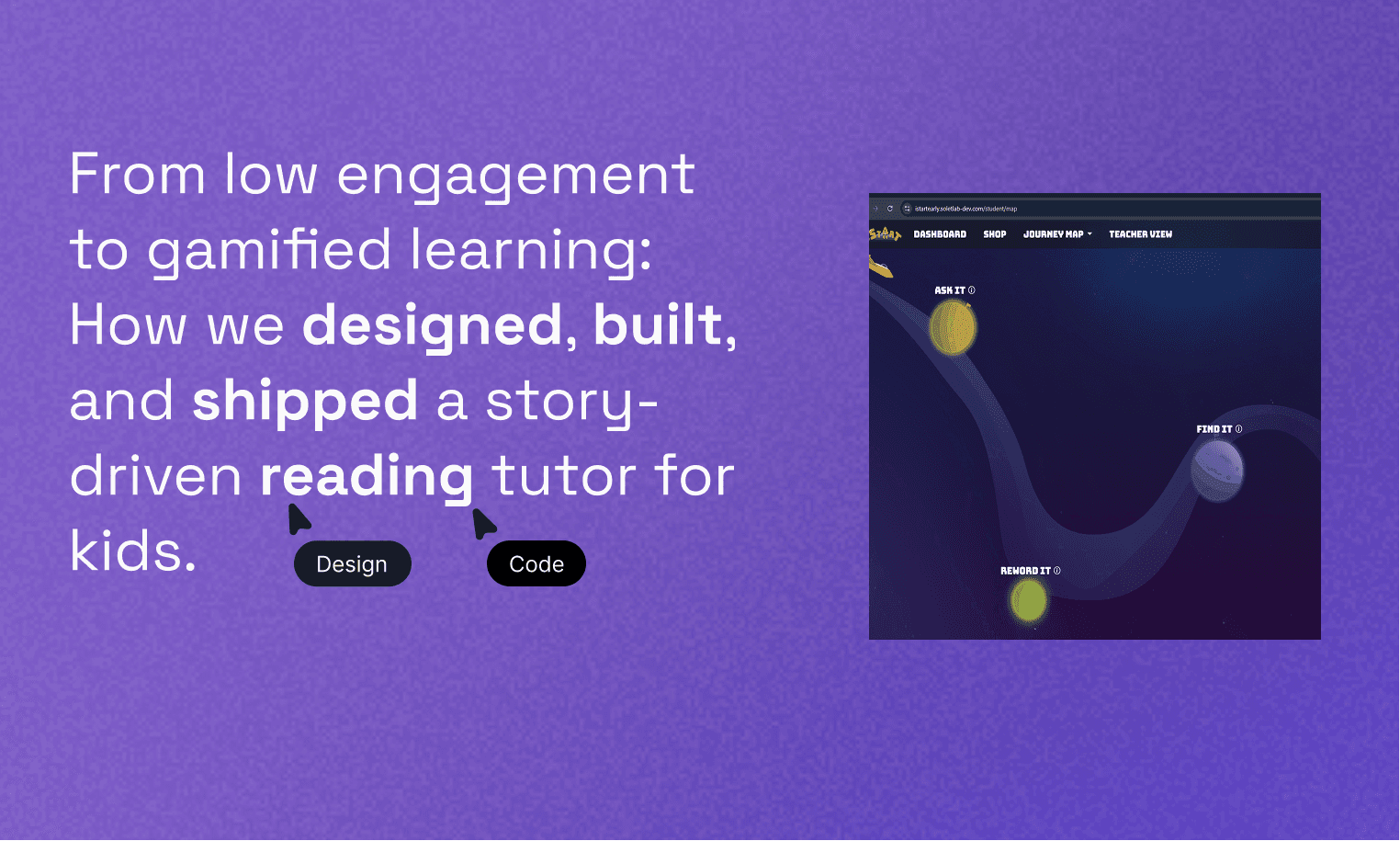
iSTART-Early (Intelligent Student Tutoring for Active Reading and Thinking) is an intelligent tutoring system developed for 3rd and 4th-grade students. It offers personalized, game-based instruction and practice on reading comprehension strategies—Ask It, Reword It, Find It, Explain It, and Summarize It—using grade-appropriate informational texts. The system utilizes Natural Language Processing (NLP), Automated Speech Recognition (ASR), and Text-to-Speech (TTS) technologies to provide real-time formative feedback. A teacher-facing interface enables performance monitoring, supporting blended learning.
My Role
Timeline
6 months - May 2024 to Nov 2024.
Team
Micah Watanabe, Stakeholder
Zeinab Serhan, Product Owner
Harshil Patel, Software Developer
HIGHLIGHTS
Designing Game-Based & Inclusive Reading Experiences for K–12 Learners
CONTEXT
iSTART-Early is a blended learning platform that teaches reading strategies via interactive lessons, ASR/NLP-enabled feedback, and game-based modules. It builds on the legacy of iSTART (for high schoolers), now adapted for 3rd–4th graders.

PROBLEM
Why Students Were Disengaged

Legacy Modules Had UX Gaps
Older learning modules had unclear navigation, weak visual hierarchy, and minimal feedback.

Most students dropped off mid-lesson or skipped through passive video content.

Not Designed for K–12 Learners
Original system was built for high schoolers—needed fun, game-like experiences for younger kids.
RESEARCH

Immersed in Prior Research
I studied past iSTART and iSTART-Early research papers to understand goals.

Talked with Stakeholders
Regular syncs with Zeinab (PO) and Micah (Stakeholder) to grasp expectations and limitations.

Observed What Engaged Kids
Storytelling and interactive games drove the highest engagement in early pilots.
PROCESS
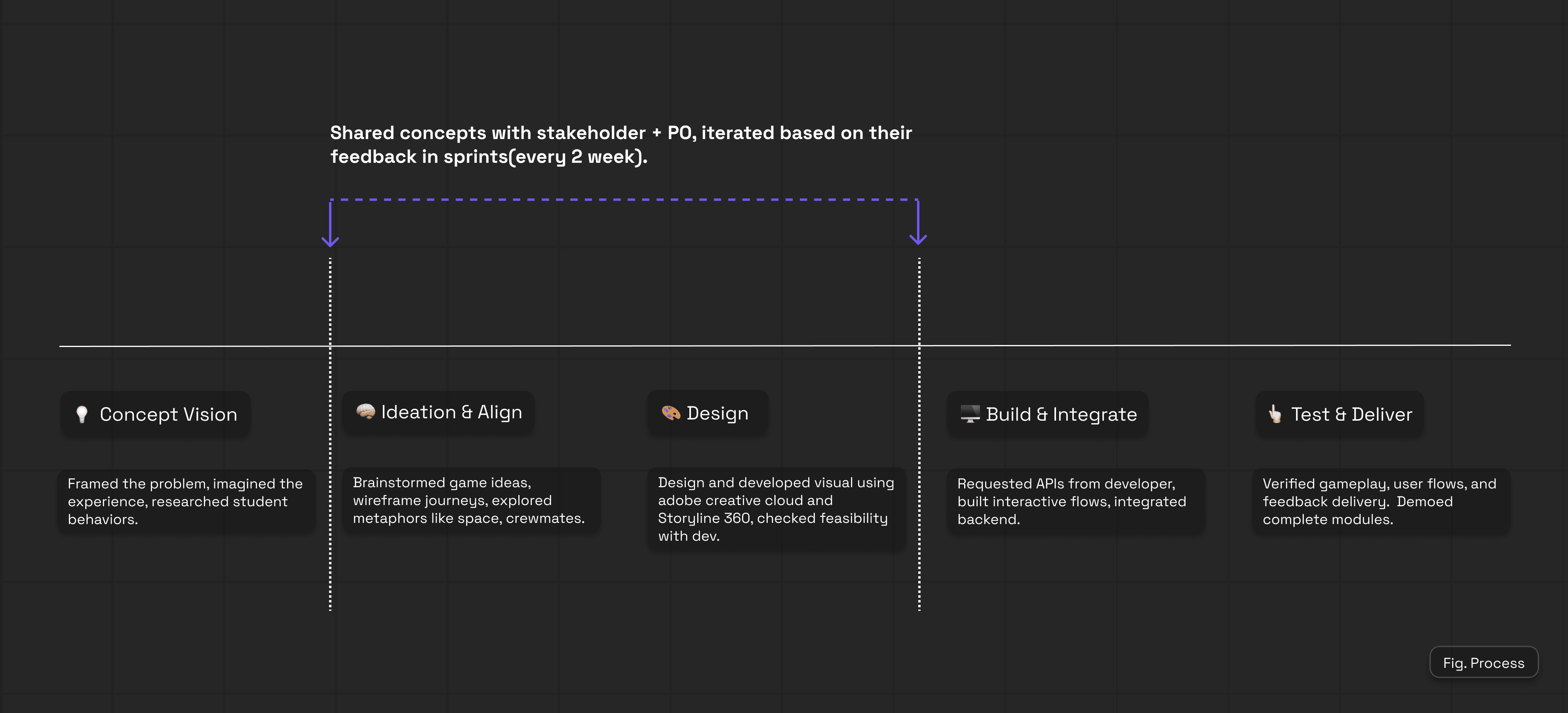
DESIGNS
Challenge 1: Paraphrasing Game
Goal
Make paraphrasing fun, engaging, and replayable for young learners
Idea
Inspired by Among Us → Crewmate Quest
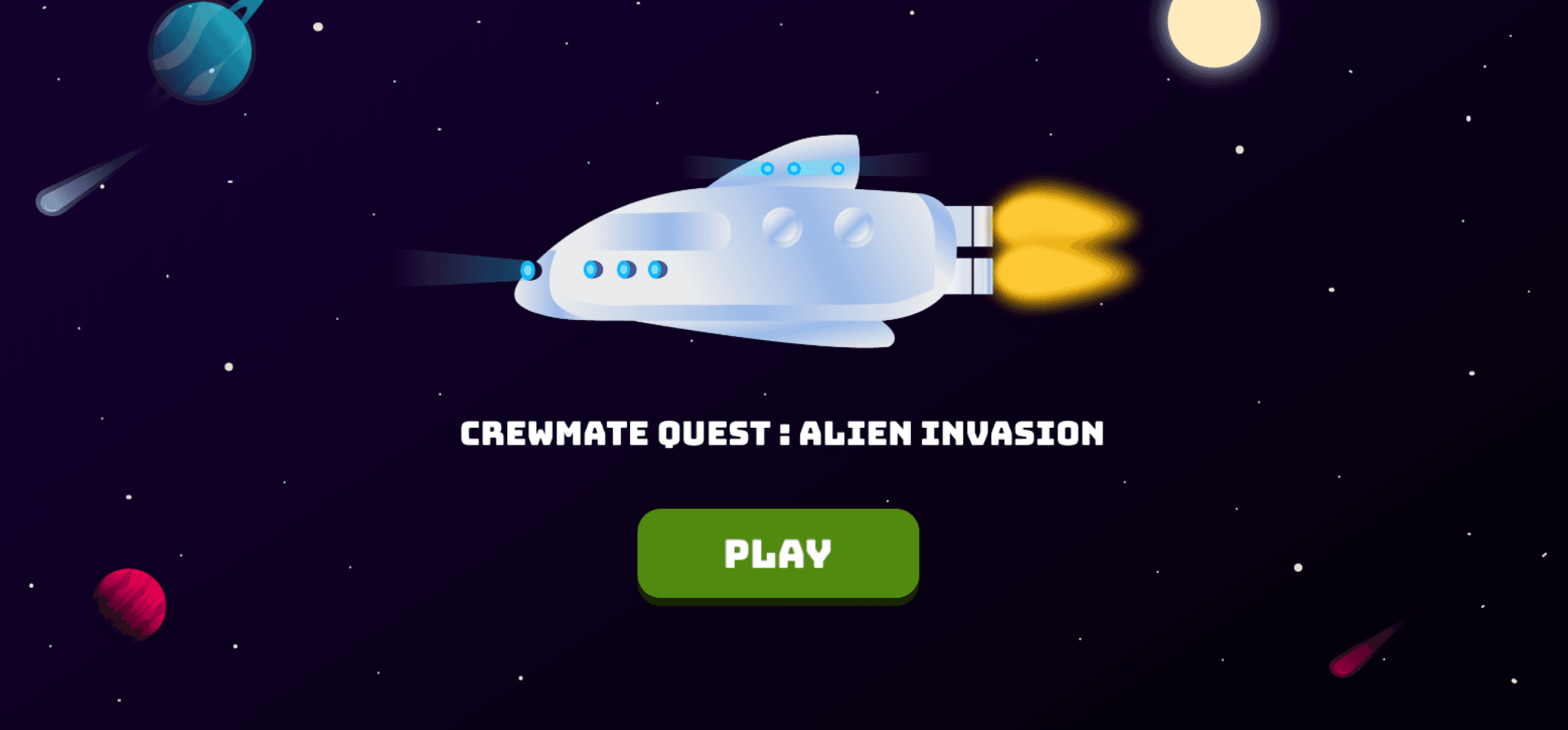
Narrative
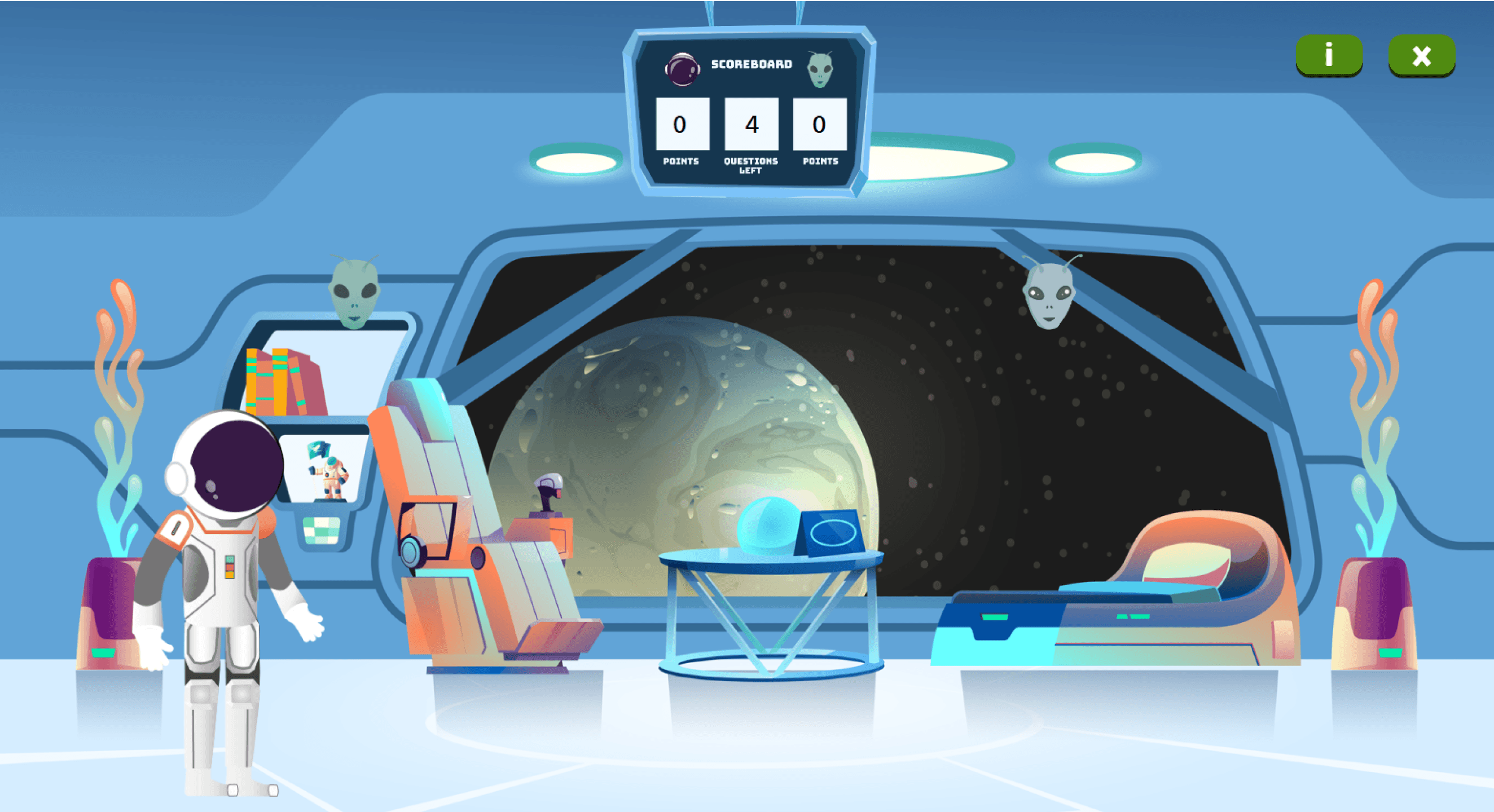
Alien invades your spaceship!
You (the crewmate) answer paraphrasing questions to take control back.
Mechanics
2 chances per question
Correct = win points
Incorrect = alien gains point
Challenge 2: Practice Modules
Overview
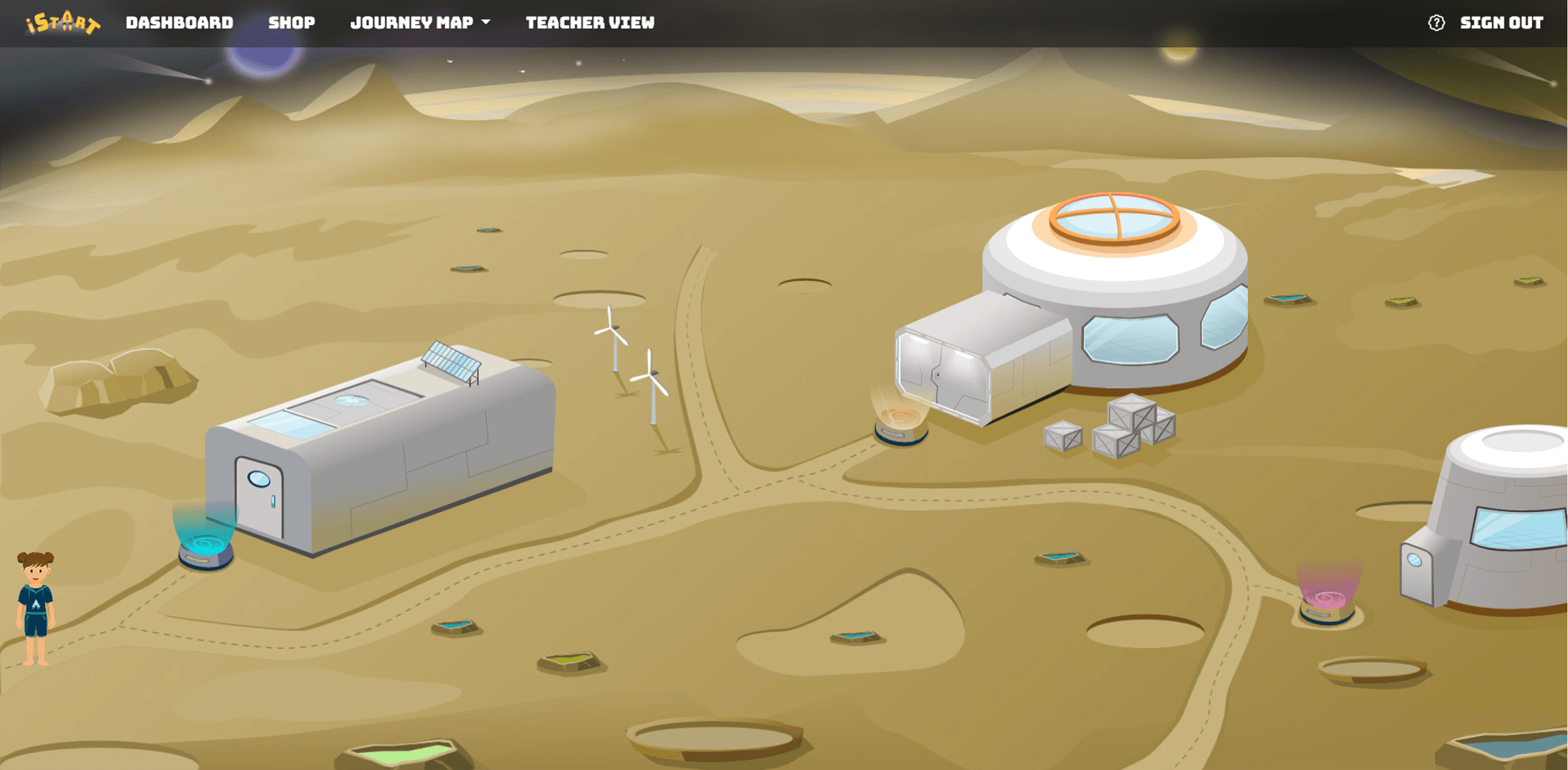
5 planets = 5 reading strategies
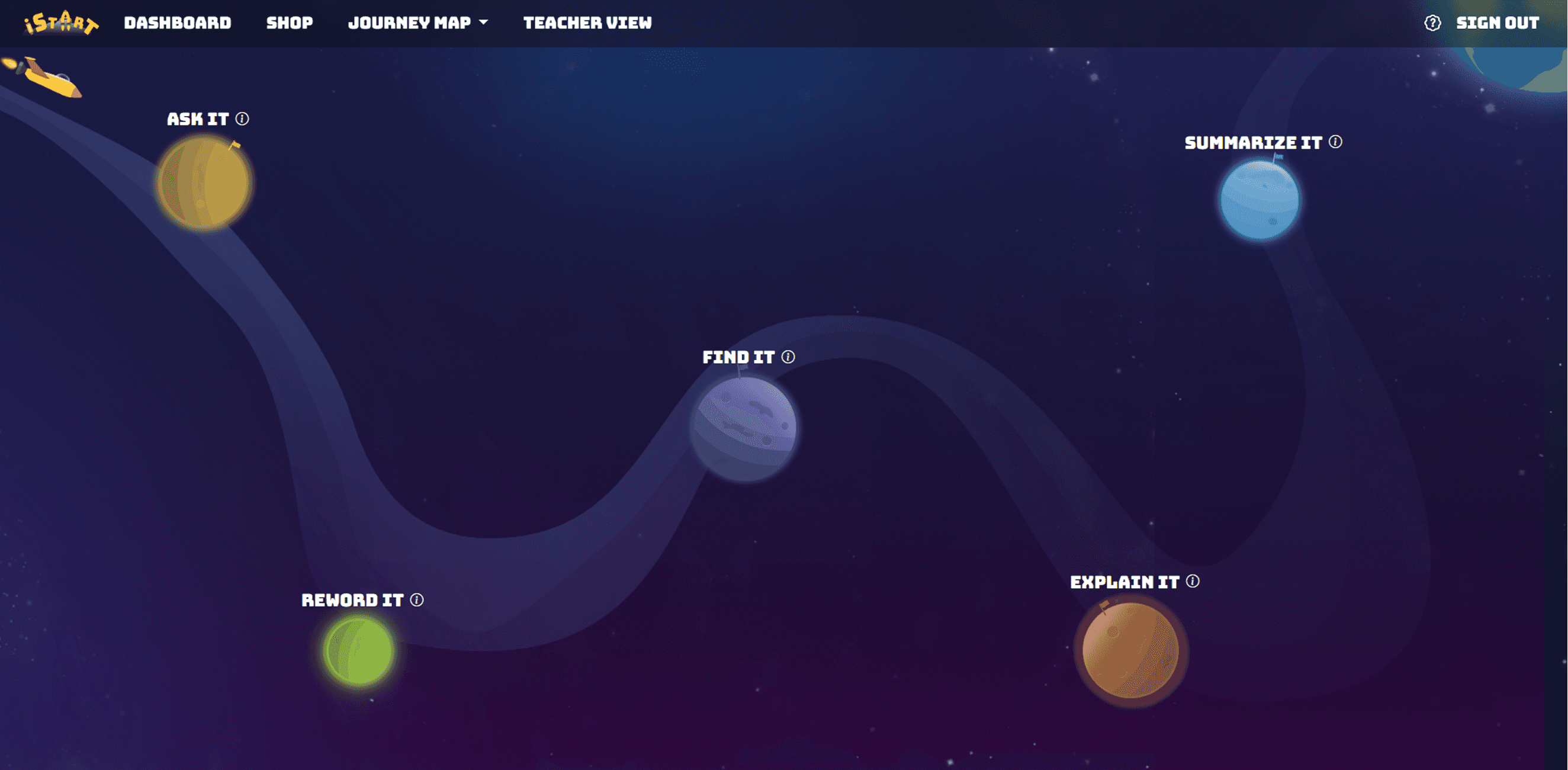
Planet Landing Page
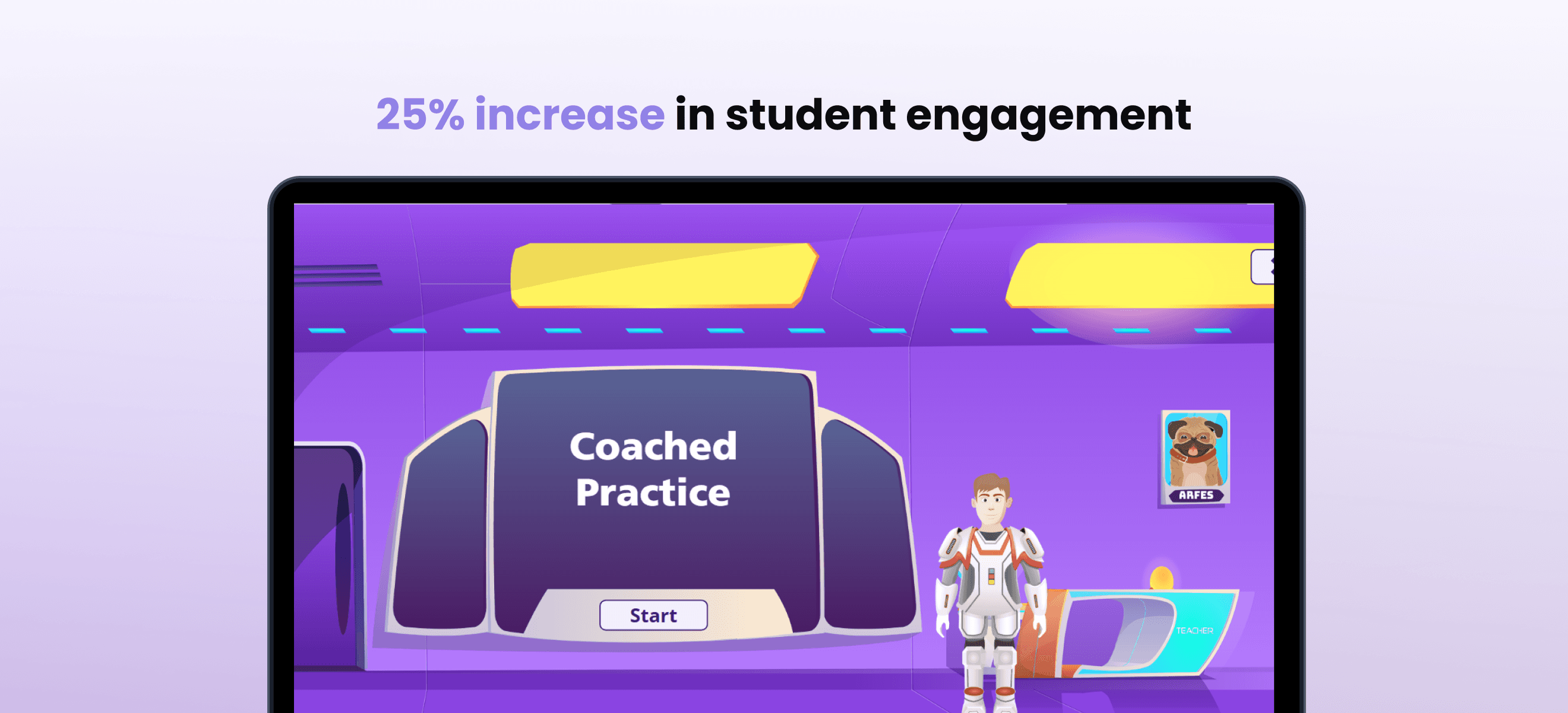
Each planet → 3 stations: Learn | Practice | Game

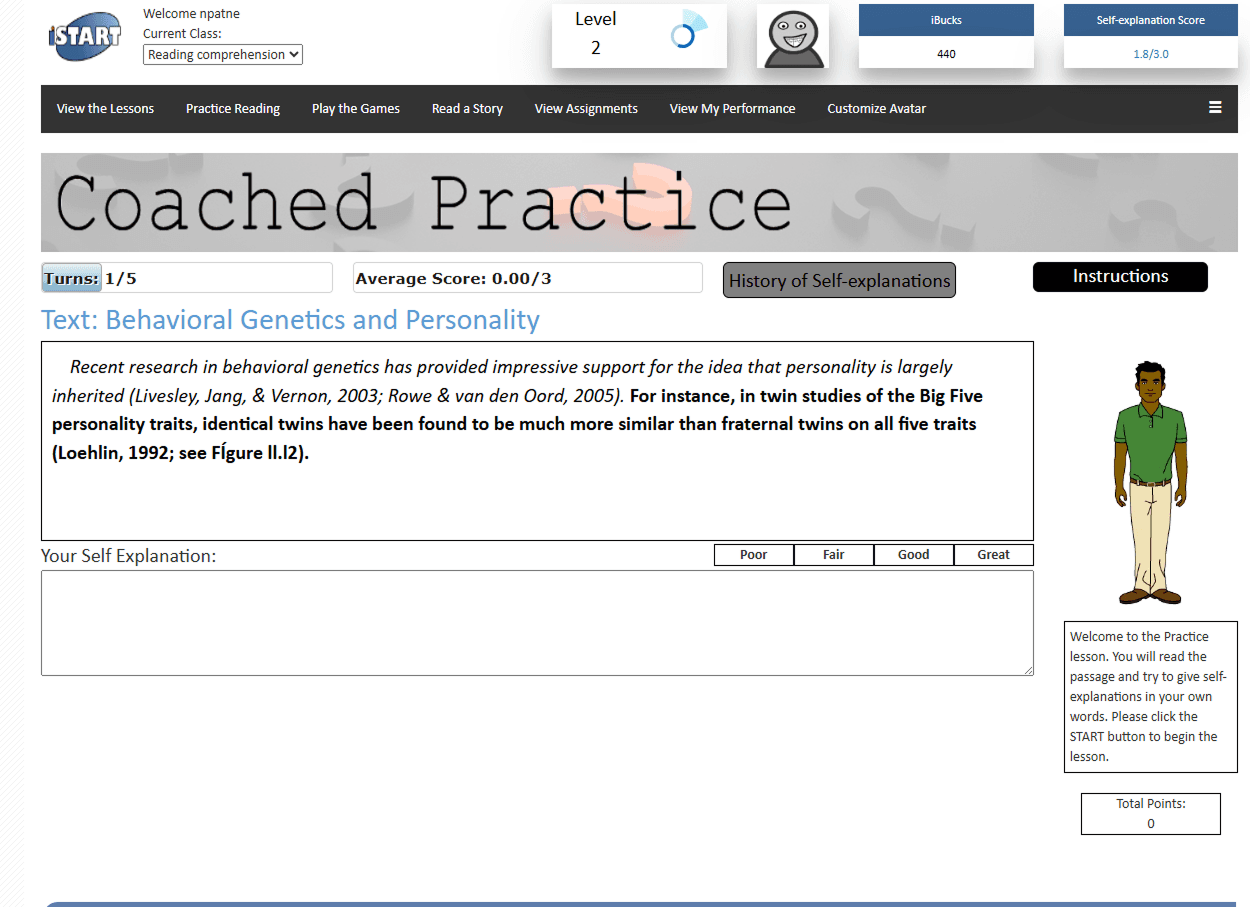
Before
Students watched passive videos → low engagement

After
Story-based interactive modules → each screen builds curiosity

Design Challenge
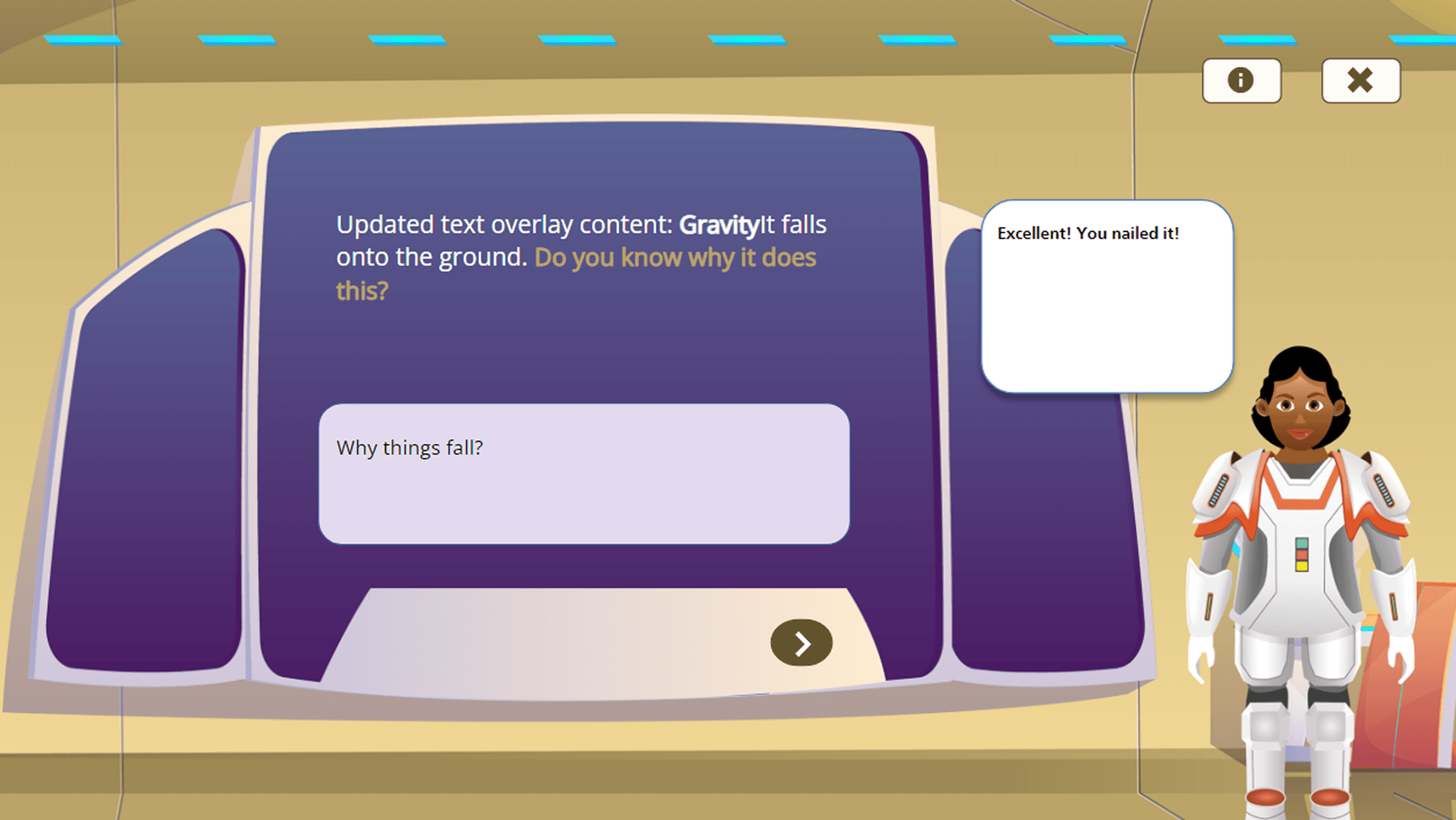
Before
Original screen with buttons.
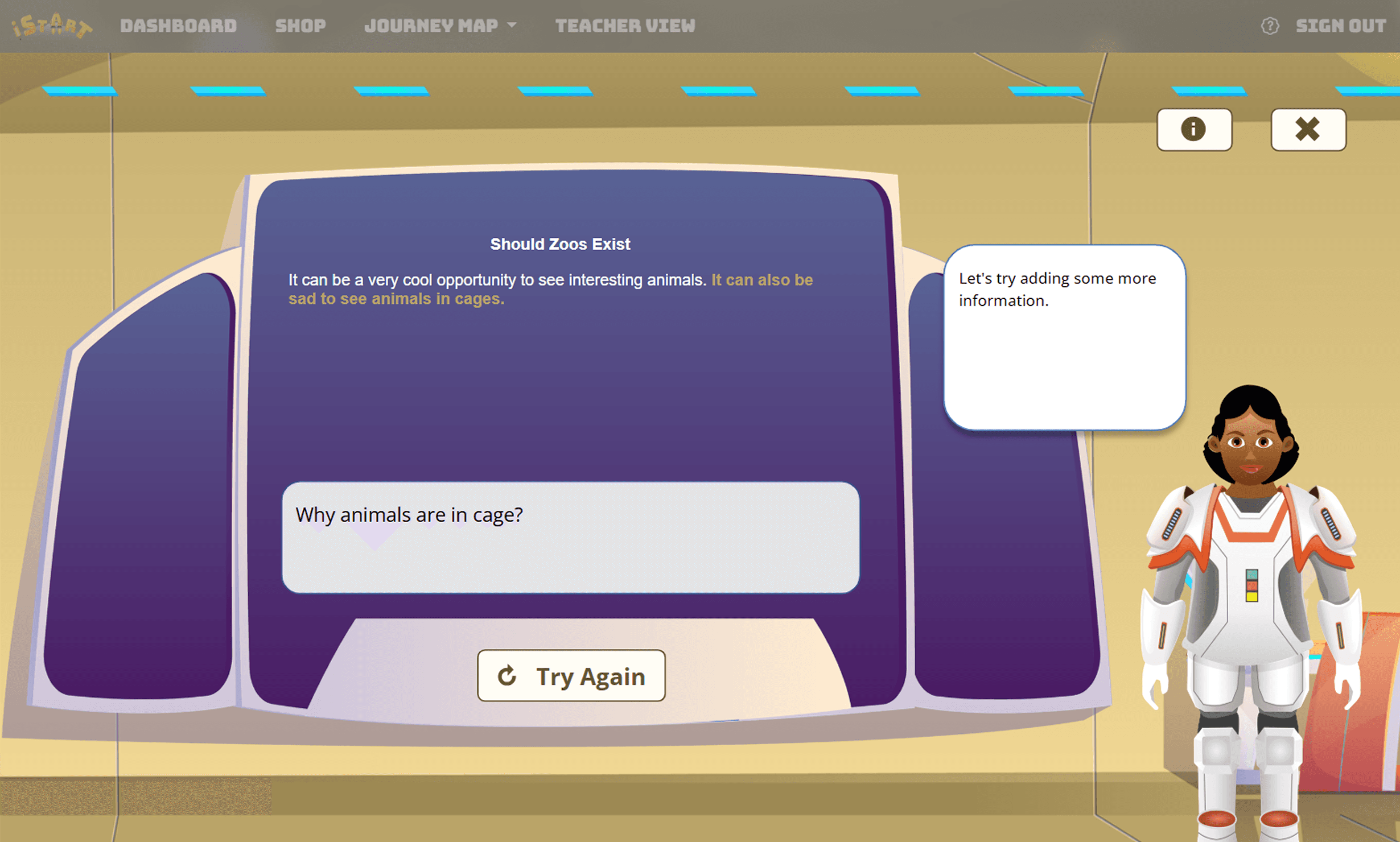
After

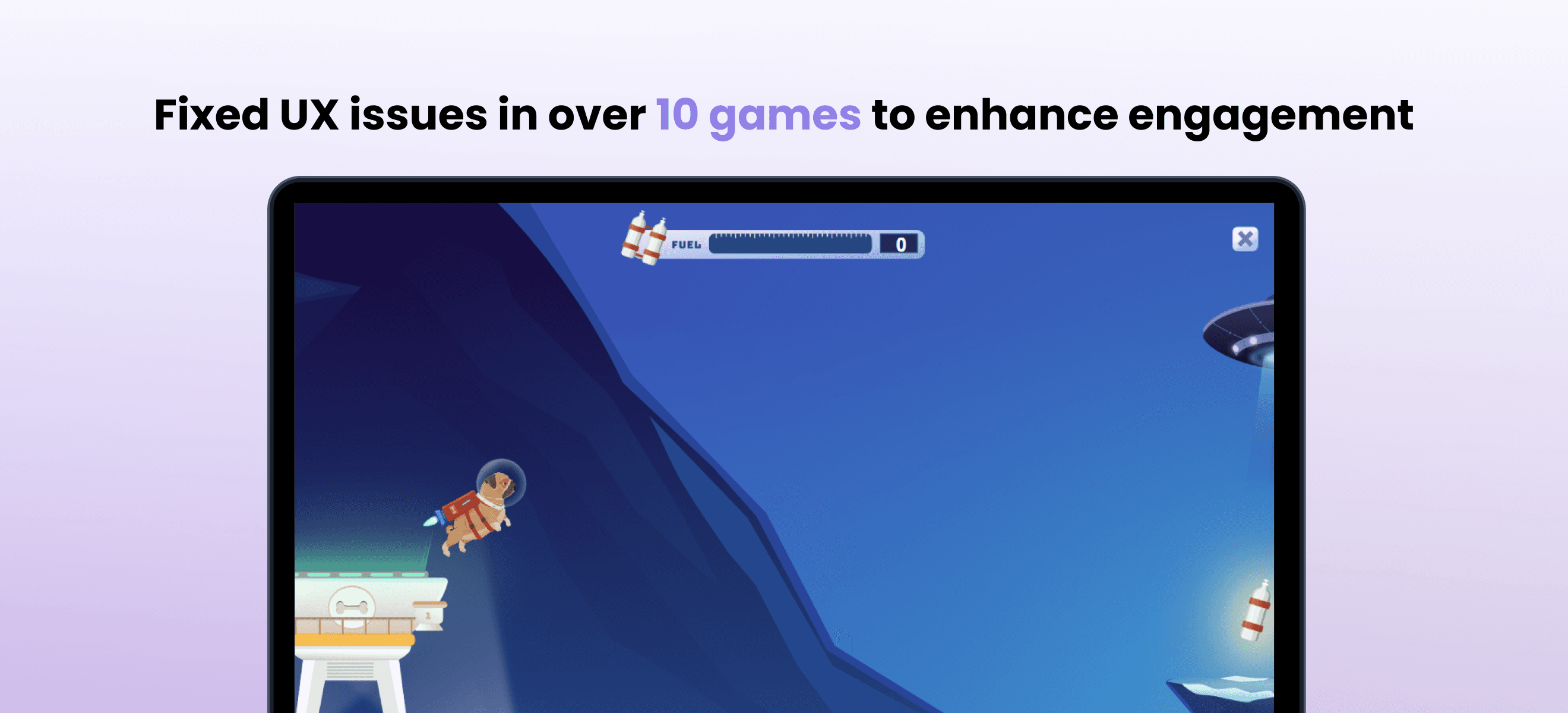
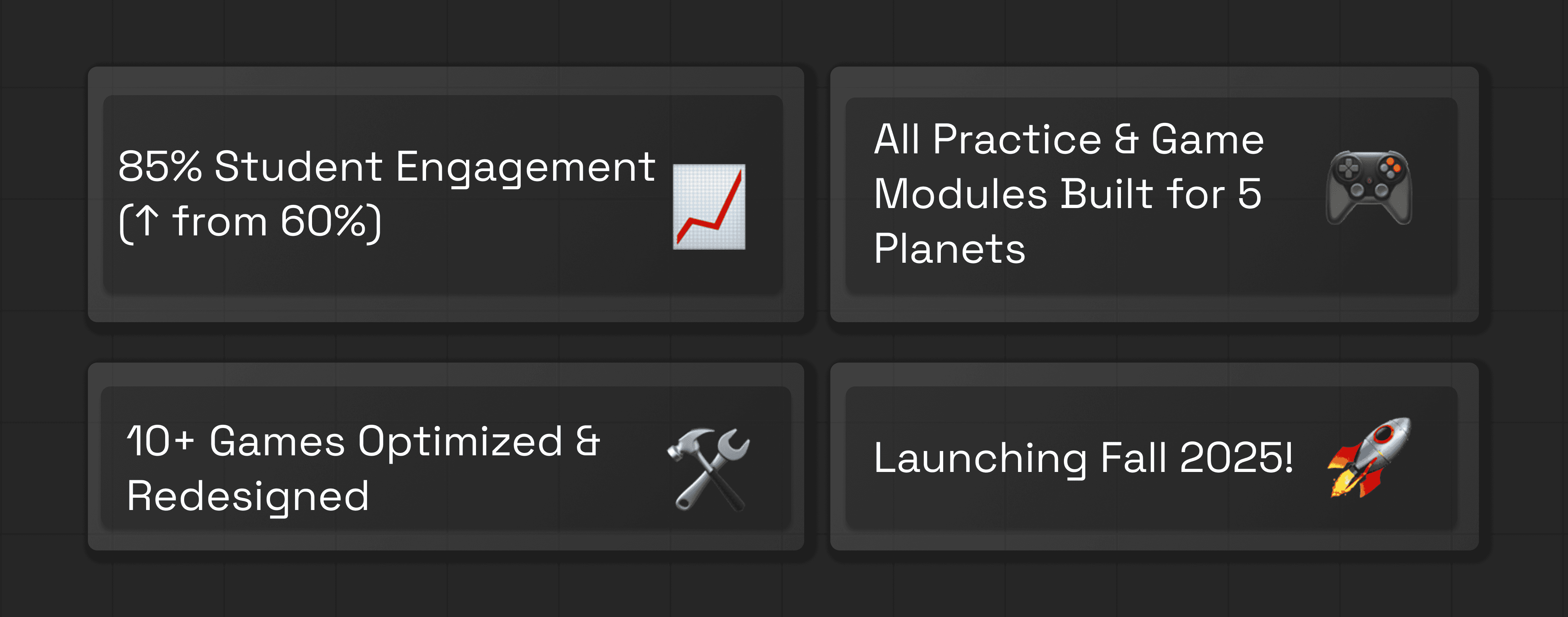
Identified usability and accessibility issues in 10+ legacy games

Rebuilt visuals, clarified instructions, improved animations

Boosted color contrast, visual hierarchy, game mechanics
IMPACT
KEY LEARNINGS
Stakeholder collaboration improves decisions—but needs compromise
Game UX is never just design → it's feedback, loops, motivation